


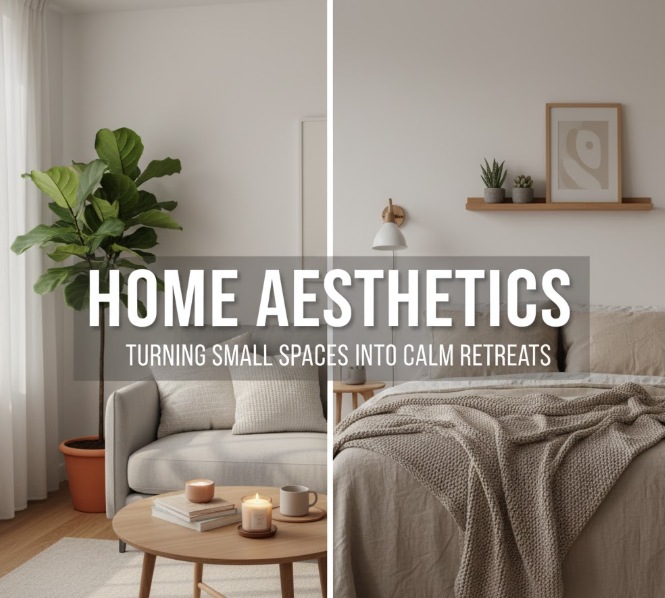
Introduction: The Beauty of Calm in Compact Living
In today’s fast-paced world, our homes have become more than just a place to eat and sleep—they’re our sanctuaries. But what happens when that sanctuary is a small apartment, a studio, or a single cozy room? Can small spaces still feel peaceful, open, and inviting? Absolutely.
Creating a calm retreat within a small space isn’t about how much square footage you have—it’s about how you use it. With the right colors, textures, lighting, and thoughtful organization, even the tiniest home can feel like a tranquil escape from the chaos outside.
This article dives deep into the art and science of home aesthetics, offering smart design strategies, mood-enhancing décor tips, and practical solutions to transform your compact space into a serene haven.
The Philosophy Behind Calm Interiors
Before diving into design tips, it’s worth understanding the philosophy of calm interiors. Spaces that soothe the mind often share these characteristics:
-
Simplicity: Less clutter means more breathing room—both physically and mentally.
-
Balance: A thoughtful blend of colors, light, and texture creates harmony.
-
Personal Connection: The space reflects your personality, values, and lifestyle.
-
Natural Influence: Elements inspired by nature—wood, plants, sunlight—enhance relaxation.
“A calm home reflects a calm mind.” – Anonymous
When you design your space with intention, every corner tells a story—and every glance brings peace.
H2: Maximizing Small Spaces with Smart Design
H3: Use Layouts That Flow Naturally
In small spaces, layout matters more than luxury. Every inch counts.
Here’s how you can make your layout work for you:
-
Think Vertically:
Use tall shelves, hanging plants, and vertical storage to free up floor space. -
Zoning Matters:
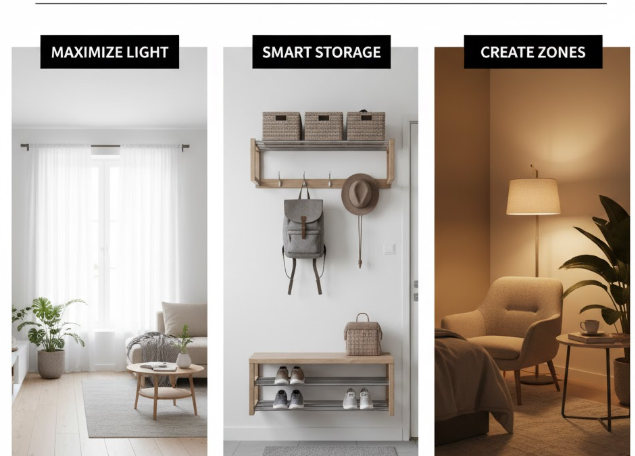
Even in a studio apartment, create visual zones—like a reading nook, dining corner, or work desk. Rugs or low dividers can subtly separate these areas without walls. -
Multi-Functional Furniture:
-
A sofa that converts into a bed
-
A coffee table with storage
-
Foldable dining sets
These pieces let you maximize usability without overcrowding.
-
| Space Challenge | Smart Solution |
|---|---|
| No dining area | Wall-mounted drop-leaf table |
| Small bedroom | Under-bed drawers or rolling boxes |
| Cramped entryway | Slim shoe cabinet + wall hooks |
| No office space | Floating desk in a corner |
H2: The Power of Colors in Creating Calm
Colors influence emotions more than we realize. A well-chosen palette can transform a cluttered space into a soothing retreat.
H3: Choose Colors That Breathe
Stick with soft, muted, and natural tones.
Some proven combinations include:
-
Soft neutrals: Beige, ivory, taupe, sand
-
Cool pastels: Misty blue, sage green, blush pink
-
Earthy tones: Olive, terracotta, warm gray
Pro Tip: Use one dominant neutral color, one accent color, and one natural texture (like wood or rattan) to maintain balance.
H3: Visual Trick — Light Reflects Calm
Light-colored walls reflect sunlight and make rooms appear larger. Matte finishes reduce glare, while satin finishes create a subtle glow.
You can also use color psychology to guide your palette:
| Color | Emotional Effect | Best Used In |
|---|---|---|
| White | Purity, openness | Living rooms, kitchens |
| Blue | Calm, focus | Bedrooms, workspaces |
| Green | Renewal, balance | Bathrooms, reading nooks |
| Beige | Warmth, coziness | Common areas |
| Gray | Stability, sophistication | Entryways, study corners |
H2: Let There Be (The Right Kind of) Light
Lighting can make or break the mood of a small space. Too harsh, and it feels clinical. Too dim, and it feels cramped. The goal is soft, layered lighting.
H3: Layer Your Lighting
Use a three-step lighting approach:
-
Ambient Light – General overhead lighting (like ceiling fixtures).
-
Task Light – Focused light for activities (like reading lamps or under-cabinet lights).
-
Accent Light – Soft, decorative illumination (like LED strips behind mirrors or art pieces).
H3: Harness Natural Light
-
Keep window treatments light—sheer curtains or blinds that filter sunlight.
-
Use mirrors opposite windows to bounce light across the room.
-
Clean your windows regularly—natural light is your best free design tool!
H2: Furniture That Feels Light and Flows Naturally
Bulky furniture can suffocate a small room. Instead, focus on pieces that look airy and flow visually.
H3: Go for Streamlined Shapes
Choose furniture with slim legs, open frames, and soft edges. Avoid large, boxy items that dominate the space.
-
Round tables instead of rectangular ones
-
Glass tops instead of solid wood for a more open look
-
Floating shelves and wall-mounted units to save floor space
H3: Opt for Modular and Foldable Designs
Modular sofas, stackable chairs, and fold-out desks are excellent for small homes. They’re flexible, modern, and easy to rearrange when you need a refresh.
Design Tip: Leave at least 18 inches of walking space between furniture pieces for visual and physical comfort.
H2: Nature’s Touch — Bringing the Outdoors In
One of the simplest ways to create calm is to connect your small home with nature.
H3: Add Greenery
Plants not only purify the air but also add life and color.
Some great indoor plant choices include:
-
Snake plant (low-maintenance)
-
Peace lily (air-purifying)
-
Pothos (great for hanging)
-
ZZ plant (thrives in low light)
Arrange plants at different heights—on shelves, floors, and window sills—to create layers of green.
H3: Use Natural Materials
Incorporate organic materials like:
-
Wood: Furniture, picture frames, shelves
-
Rattan or cane: Lampshades, chairs
-
Cotton or linen: Curtains and cushions
-
Stone or ceramic: Vases, decor accents
| Material | Feel It Adds | Best Used For |
|---|---|---|
| Wood | Warmth and grounding | Flooring, shelves |
| Linen | Softness and airiness | Curtains, bedding |
| Stone | Strength and texture | Kitchen surfaces |
| Bamboo | Lightness and eco-friendliness | Lighting, small décor |
H2: Decluttering — The Art of Peaceful Living
H3: Why Clutter Kills Calm
Clutter competes for attention and triggers mental noise. When every surface is crowded, your brain can’t fully relax.
Here’s how to declutter effectively:
-
Start Small: Focus on one area—like a desk or nightstand.
-
Sort by Use: If you haven’t used it in six months, it’s time to let go.
-
Store Smartly:
-
Use under-bed storage boxes.
-
Choose furniture with hidden compartments.
-
Label containers for easy access.
-
H3: Adopt the “One In, One Out” Rule
Whenever you bring a new item home, remove one old item. This keeps clutter from creeping back in.
“Minimalism is not about having less—it’s about making room for more of what matters.”
H2: Textures That Calm the Senses
When space is limited, texture becomes your secret design weapon. It adds depth, comfort, and sensory balance without cluttering.
H3: Mix Soft and Hard Elements
Combine smooth surfaces with tactile materials.
Examples:
-
Soft throw blankets over leather sofas
-
Woven rugs on wooden floors
-
Linen curtains beside metallic frames
H3: Stick to a Few Key Textures
To avoid chaos, use no more than three textures per room.
For instance:
-
Wood (floor) + cotton (curtains) + ceramic (vases)
This creates visual unity and a cozy, layered effect.
H2: Personal Touches That Bring Warmth
H3: Display What Brings You Joy
Choose decorations that spark happiness or calm, not just trendiness.
Some ideas:
-
Family photos in matching frames
-
A single statement art piece
-
Travel souvenirs in minimalist arrangements
H3: Scent and Sound
-
Use essential oil diffusers with lavender, chamomile, or eucalyptus scents.
-
Add a small tabletop fountain or play gentle background music to complete the sensory calm.
| Sense | Design Element | Mood Effect |
|---|---|---|
| Sight | Minimal, balanced décor | Visual calm |
| Smell | Fresh or floral scents | Emotional relaxation |
| Sound | Soft ambient noise | Deep focus |
| Touch | Warm, soft fabrics | Comfort |
H2: Room-by-Room Calm Transformation
Let’s apply these ideas practically to different rooms.
H3: Bedroom — The Ultimate Retreat
-
Keep it clutter-free and tech-free.
-
Use soft white or pastel bedding.
-
Add a single piece of nature—like a potted plant or wooden nightstand.
-
Warm bedside lighting is better than bright overhead bulbs.
H3: Living Room — Open Yet Cozy
-
Choose light furniture with exposed legs to create a sense of space.
-
Use neutral rugs to define zones.
-
Display art at eye level for balanced sightlines.
-
Keep cords and cables out of sight with smart cable organizers.
H3: Kitchen — Simple and Efficient
-
Keep countertops clear except for essentials.
-
Use open shelves with neatly stacked dishes.
-
Add a small herb garden on the windowsill for freshness.
H3: Bathroom — Mini Spa Vibes
-
Use light tiles and mirrors to expand the feel.
-
Keep towels rolled neatly in baskets.
-
Introduce aromatherapy candles or eucalyptus bundles.
H2: Small Details, Big Difference
Sometimes, it’s the little details that turn a small home into a serene retreat.
H3: Window Treatments
Choose sheer fabrics that let in light but maintain privacy.
H3: Artwork and Mirrors
Hang one large mirror instead of multiple small ones—it visually doubles the room size.
H3: Flooring
Use consistent flooring throughout the home to create a seamless flow.
H3: Tech Organization
Hide cables and chargers in cable boxes or decorative baskets. Visual clutter from electronics often disturbs calm energy.
H2: Quick Visual Guide — Calm Space Essentials
| Element | Goal | Example |
|---|---|---|
| Color Palette | Soft & Neutral | White + Sage Green |
| Lighting | Layered Warm Glow | Lamps + Candles |
| Furniture | Airy & Functional | Modular Sofa |
| Textures | Balanced | Linen, Wood, Ceramic |
| Décor | Minimal & Meaningful | One Art Piece |
| Nature | Refreshing | Indoor Plants |
| Storage | Hidden & Efficient | Floating Cabinets |
(Use this as a simple blueprint when designing your calm retreat.)
H2: Maintaining Your Calm Retreat Over Time
A calm home isn’t built in one day—it’s maintained with mindful habits.
H3: Weekly 10-Minute Reset
Every week, spend just ten minutes tidying up—put things back, wipe surfaces, and refresh air with open windows.
H3: Seasonal Refresh
-
Swap heavy blankets for light throws in summer.
-
Add cozy textures and warm lighting in winter.
H3: Keep Only What You Love
If an item no longer feels right in your space, donate or repurpose it. Your home should evolve with you.
Conclusion: Serenity Starts at Home
You don’t need a large mansion or a designer budget to create peace and beauty in your home. The secret lies in simplicity, light, balance, and meaning.
When you thoughtfully arrange your space—with soft hues, natural textures, and a touch of personal warmth—you craft more than décor. You craft an experience.
Your home becomes more than a place—it becomes a calm retreat that welcomes you every day, whispers serenity in every corner, and reminds you that peace doesn’t need space—it needs intention.
