


Introduction: Why Happiness Feels Like a Puzzle (But Isn’t)
Everyone wants to be happy — but what does that really mean? For many, happiness feels like a distant goal, something that happens only after you land your dream job, buy your ideal house, or find the perfect relationship. But science tells a very different story: happiness isn’t about achieving big things; it’s built from small, daily habits that train your brain to feel better, think clearer, and live fuller.
In fact, studies in positive psychology show that only about 10% of happiness depends on life circumstances (like income or appearance). The remaining 90% comes from our thoughts, habits, and the way we react to life. That means true happiness is something we can build — step by step, habit by habit.
This article explores how small lifestyle changes — backed by science — can bring big, lasting improvements to your happiness.
The Real Science Behind Happiness
Before diving into the habits, it helps to know what’s actually happening in your brain when you feel happy.
1. The Brain’s “Happy Chemicals”
Your emotions are not random — they’re driven by chemicals that your brain releases. The main ones linked to happiness are:
| Chemical | Commonly Known As | What It Does |
|---|---|---|
| Dopamine | “The Reward Chemical” | Makes you feel motivated and satisfied after achieving something. |
| Serotonin | “The Mood Stabilizer” | Helps you feel calm, content, and confident. |
| Oxytocin | “The Love Hormone” | Builds trust, connection, and social bonding. |
| Endorphins | “The Pain Relievers” | Reduce pain and bring on feelings of euphoria, especially during exercise. |
When your lifestyle supports the release of these chemicals, you naturally feel happier — without needing external rewards like money or fame.
Small Lifestyle Changes That Boost Happiness Naturally
Let’s explore the simple, science-backed habits that can lift your mood and make a long-term difference.
1. Start Your Day with Gratitude
Gratitude is more than saying “thank you” — it’s training your brain to notice the good.
Research shows that people who write down three things they’re thankful for every morning feel happier and less stressed. Gratitude helps shift your focus from what’s missing to what’s already working in your life.
How to do it:
-
Keep a gratitude journal by your bed.
-
Each morning, list 3 things you’re thankful for (even small ones like a sunny day or a good meal).
-
Reflect on how each thing makes your life better.
🧠 Science Insight: Practicing gratitude activates your brain’s dopamine and serotonin systems, improving mood and motivation.
2. Move Your Body (Even for 10 Minutes)
Exercise isn’t just about fitness — it’s a natural happiness booster.
Physical activity releases endorphins, dopamine, and serotonin, all of which help fight stress and anxiety.
You don’t need a gym membership. Even a 10-minute walk, stretching, or dancing to your favorite song can lift your mood.
Try this:
-
Take short walks during breaks.
-
Do 20 jumping jacks in the morning.
-
Try yoga or light stretching before bed.
📊 Fun Fact: According to Harvard Health, just 15 minutes of daily exercise can reduce depression risk by 26%.
3. Get Enough Quality Sleep
Sleep and happiness are tightly connected. Lack of sleep affects your mood, memory, and ability to handle stress.
When you sleep well:
-
Your body repairs itself.
-
Your mind processes emotions better.
-
You wake up with a clear head and positive energy.
Sleep better by:
-
Going to bed and waking up at the same time daily.
-
Avoiding screens an hour before bed.
-
Keeping your bedroom dark, cool, and quiet.
💤 Science Note: During deep sleep, your brain clears toxic proteins linked to anxiety and depression — making rest one of the most powerful happiness habits.
4. Spend Time Outdoors
Sunlight is nature’s free antidepressant. It triggers vitamin D production and increases serotonin, improving mood and energy levels.
Ways to enjoy the outdoors:
-
Take your morning coffee outside.
-
Sit near a sunny window while working.
-
Try gardening or walking in the park.
🌞 Science Speaks: A 20-minute walk in nature can lower stress hormones and increase happiness levels by up to 20%.
5. Build Strong Social Connections
Human beings are wired for connection. Relationships — not riches — are the biggest predictor of lifelong happiness.
How to strengthen your bonds:
-
Call or meet a friend weekly.
-
Have dinner with family without distractions.
-
Volunteer or join a local club.
Quick tip: When you spend time with loved ones, your brain releases oxytocin, deepening emotional bonds and trust.
💬 Harvard’s 75-year Happiness Study found that people with strong relationships live longer and are happier — regardless of income or social class.
6. Practice Mindfulness or Deep Breathing
Happiness isn’t just about doing more; it’s also about being more present.
Mindfulness trains your brain to focus on the current moment instead of worrying about the past or future.
Simple breathing practice:
-
Sit comfortably.
-
Inhale slowly for 4 seconds, hold for 4 seconds, and exhale for 6 seconds.
-
Repeat 5–10 times.
🧘 Science Insight: Just 5 minutes of deep breathing can reduce cortisol (the stress hormone) and help your brain focus better.
7. Limit Screen Time and Digital Overload
Too much scrolling can drain happiness. Studies link high social media use with anxiety, comparison, and lower self-esteem.
Set digital boundaries:
-
Turn off unnecessary notifications.
-
Set “no-phone” zones (like during meals or before bed).
-
Follow pages that inspire positivity, not comparison.
📵 Science Fact: People who spend less than 30 minutes per day on social media report higher life satisfaction and less loneliness.
8. Eat Foods That Fuel Happiness
What you eat affects how you feel.
The gut produces nearly 90% of your serotonin, so your diet has a direct link to your mood.
Mood-Boosting Foods Table:
| Food Type | Examples | Benefit |
|---|---|---|
| Omega-3s | Salmon, walnuts, flaxseeds | Boost brain health & reduce anxiety |
| Probiotics | Yogurt, kefir, kimchi | Improve gut health & serotonin |
| Antioxidants | Berries, spinach, green tea | Reduce inflammation & stress |
| Complex Carbs | Oats, sweet potatoes, brown rice | Stabilize energy and mood |
🥗 Tip: Avoid too much sugar or processed food — they cause energy crashes that lower dopamine and mood stability.
9. Give — Even Small Acts Count
Helping others triggers a “helper’s high.” Acts of kindness release dopamine and oxytocin, giving you a warm, connected feeling.
Small ways to give back:
-
Compliment someone sincerely.
-
Donate clothes or food.
-
Offer help to a friend or neighbor.
💖 Science Insight: MRI studies show that giving activates the same brain areas as receiving a reward — meaning generosity literally feels good.
10. Set Small, Meaningful Goals
Happiness grows when you feel progress — not perfection.
When you set small goals and achieve them, your brain releases dopamine, reinforcing motivation and satisfaction.
How to set effective goals:
-
Break big tasks into smaller steps.
-
Track your wins daily (no matter how small).
-
Celebrate progress, not just the final result.
🎯 Tip: The key is “meaningful action.” Doing something aligned with your values brings deeper joy than chasing random achievements.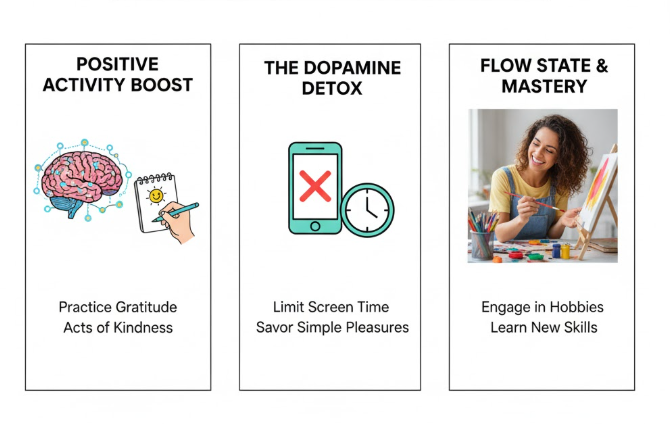
11. Laugh Often and Don’t Take Life Too Seriously
Laughter isn’t just fun — it’s therapy. It boosts endorphins, improves blood flow, and lowers stress.
Add laughter to your life:
-
Watch a funny show.
-
Share jokes with friends.
-
Laugh at your own mistakes.
😂 Science Note: A good laugh can relax your body for up to 45 minutes and improve immune function.
12. Declutter Your Space, Clear Your Mind
A messy environment often leads to mental clutter. Organizing your surroundings can help you feel calmer and more in control.
Quick declutter tips:
-
Start with one small area (like your desk).
-
Keep only what adds value or joy.
-
Donate or recycle unused items.
🧹 Psychology Insight: People who live in tidy spaces report less stress and better focus, leading to a happier mindset.
13. Practice Self-Compassion
Many people talk to themselves more harshly than they’d ever speak to a friend. Self-compassion means being kind to yourself — especially when you make mistakes.
How to practice it:
-
Replace “I’m so stupid” with “I made a mistake, but I can learn from it.”
-
Treat failures as lessons, not judgments.
-
Write a note to yourself as if comforting a friend.
💭 Science Fact: Studies show that self-compassion increases resilience, motivation, and long-term happiness far more than self-criticism ever could.
Visual Infographic: The Happiness Habit Loop
(Imagine a simple infographic)
Trigger → Action → Reward → Chemical Response → Happiness Boost
Example:
🌞 Morning sunlight → Short walk → Endorphin release → Energy boost → Happier mood
Repeating such cycles daily trains your brain to expect and enjoy happiness naturally.
Common Myths About Happiness (Debunked!)
| Myth | Reality |
|---|---|
| “I’ll be happy when I get what I want.” | True happiness comes from appreciation and mindset, not material success. |
| “Some people are just born happier.” | While genetics play a role, 40% of happiness depends on your daily habits. |
| “Money buys happiness.” | After basic needs are met, money adds little to long-term happiness. |
| “Being happy means always feeling good.” | Real happiness includes handling sadness with strength and perspective. |
A Sample “Happiness Routine” You Can Try This Week
| Time | Activity | Benefit |
|---|---|---|
| Morning | Write 3 things you’re grateful for | Boosts positivity and serotonin |
| Afternoon | Take a 10-min walk outdoors | Releases endorphins & clears your mind |
| Evening | Call or text a loved one | Triggers oxytocin & emotional bonding |
| Before Bed | Practice deep breathing for 5 mins | Reduces cortisol & improves sleep |
Try it for just 7 days, and you’ll likely feel calmer, lighter, and more energized.
The Ripple Effect of Happiness
Happiness doesn’t stop with you — it spreads. When you’re kind, optimistic, or smiling, it naturally affects those around you. This “emotional contagion” creates a cycle where your happiness helps others feel happier too.
💡 Example: Smiling at someone in the morning might make them smile at another person — a chain reaction that brightens the day for many.
Why Small Changes Matter Most
Big goals like “becoming happier” often feel vague. But small, consistent actions — the kind you repeat every day — are what create real transformation.
Think of it like compound interest:
-
One kind thought today.
-
One walk tomorrow.
-
One extra hour of sleep the next day.
Each small act adds up to a happier, healthier mindset that lasts a lifetime.
Conclusion: Your Happiness is in Your Hands
Happiness isn’t luck, luxury, or something you stumble upon. It’s a science — and more importantly, a choice. Every small action you take — whether it’s expressing gratitude, moving your body, sleeping better, or being kind — reshapes your brain to find joy in everyday life.
You don’t need a perfect life to feel fulfilled. You just need small, intentional habits that fuel your mind, body, and soul.
✨ Start today. Smile more, stress less, and take one small step toward happiness — your future self will thank you.
