


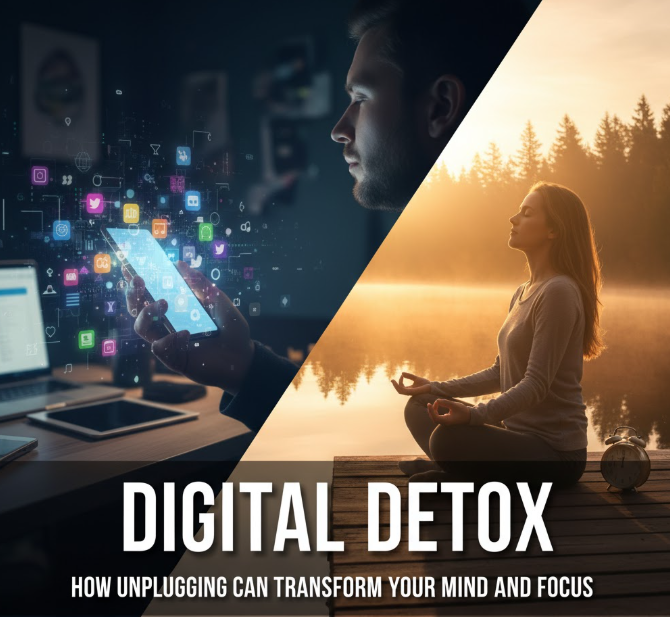
Introduction: Why Taking a Break from Screens Matters More Than Ever
Let’s be honest — we live in a world that never stops buzzing. Notifications, messages, likes, emails, and endless scrolling have become part of our daily rhythm. From the moment we wake up to the time we close our eyes, we’re surrounded by screens. While technology makes life easier and more connected, it also silently drains our attention, happiness, and mental energy.
That’s where the concept of a digital detox steps in.
It’s not about abandoning technology altogether — it’s about finding a healthy balance.
A digital detox simply means taking intentional breaks from digital devices (phones, laptops, TVs, social media) to reconnect with yourself and the real world around you.
If you’ve ever felt mentally exhausted after scrolling through social media, struggled to focus on tasks, or found yourself comparing your life to others online — you’re not alone. The constant connection is reshaping how we think, feel, and live. But the good news is: unplugging can transform your mind, improve focus, and help you reclaim your peace.
Let’s dive deep into how and why unplugging works — and how you can start your own journey toward a clearer, calmer mind.
The Hidden Cost of Constant Connectivity
Technology is amazing — but overuse comes with real consequences.
Here are a few ways our digital habits silently affect us every day:
1. Attention Span Shrinkage
Research suggests that the average human attention span has dropped from 12 seconds in 2000 to about 8 seconds today — shorter than that of a goldfish!
Constant notifications and multitasking make it hard for our brains to stay focused on one task.
2. Mental Fatigue
Our brains weren’t designed to process so much digital information all the time. The endless stream of videos, texts, and news can lead to information overload, making us feel mentally drained even when we haven’t done much physically.
3. Emotional Exhaustion
Social media comparison is one of the biggest emotional traps. Seeing everyone’s “perfect” moments can create feelings of inadequacy, loneliness, and anxiety.
4. Sleep Disruption
Blue light from screens blocks the production of melatonin, a hormone that helps you sleep. Scrolling before bed can delay sleep and reduce its quality.
5. Reduced Real-World Connection
When our attention is glued to screens, real conversations and relationships suffer.
We might be “connected” digitally but disconnected emotionally.
📊 Quick Look: The Impact of Screen Overuse
| Effect on Health | What Happens | Resulting Symptoms |
|---|---|---|
| Attention & Focus | Overstimulation from notifications | Shorter attention span, poor memory |
| Mental Energy | Information overload | Burnout, brain fog |
| Emotional Well-being | Social comparison, negative content | Anxiety, depression, loneliness |
| Physical Health | Blue light exposure, poor posture | Eye strain, headaches, back pain |
| Sleep Quality | Screen use before bed | Insomnia, fatigue |
What Is a Digital Detox (and What It Isn’t)
A digital detox is a period of time when you intentionally reduce or eliminate your use of digital devices — including smartphones, computers, TVs, and social media.
But let’s make something clear: it’s not about rejecting technology completely. It’s about taking control of how and when you use it.
A Digital Detox IS:
-
A mindful break from screens
-
A way to reduce stress and mental clutter
-
A chance to reconnect with real-life activities
-
A method to improve productivity and focus
A Digital Detox IS NOT:
-
Quitting technology forever
-
Running away from responsibilities
-
Ignoring messages or work duties
-
A punishment or extreme lifestyle change
Think of it like a “reset button” for your brain — a moment to pause, breathe, and re-align your habits with your goals.
The Science Behind Why Unplugging Works
Unplugging isn’t just a feel-good idea — science backs it up.
Here’s what happens when you reduce screen time:
1. Your Brain Gets to Rest
When constantly stimulated by notifications, your brain stays in alert mode. A digital detox gives your mind a break, allowing it to recharge and restore focus.
2. Dopamine Levels Normalize
Every “like,” “comment,” or “new follower” releases dopamine — the pleasure chemical. Over time, this leads to dependency, similar to addiction. Taking a break helps rebalance dopamine levels, making you feel more satisfied with real-life moments again.
3. You Regain Control Over Attention
By minimizing distractions, your brain strengthens its ability to concentrate. This leads to improved creativity, problem-solving, and decision-making.
4. Reduced Stress and Anxiety
Studies show that heavy social media use increases anxiety and depression. Less screen time means more mental peace.
🧠 Brain Reset After Digital Detox (Research Highlights)
| Benefit | After 3 Days | After 2 Weeks | After 1 Month |
|---|---|---|---|
| Focus & Concentration | Noticeable improvement | Stronger focus | Significantly sharper thinking |
| Sleep Quality | Better bedtime patterns | Deeper rest | Fully restored circadian rhythm |
| Mood & Energy | Reduced stress | Improved mood | Sustainable emotional balance |
| Productivity | Slight increase | Noticeable jump | Major improvement |
| Social Interaction | More eye contact | Better listening | Genuine connection restored |
Signs You Need a Digital Detox
Wondering if it’s time to unplug? Here are some red flags that say yes:
-
You reach for your phone as soon as you wake up
-
You scroll mindlessly for hours without realizing it
-
You feel anxious or empty when you’re offline
-
You can’t focus on a single task without checking notifications
-
Your sleep schedule is irregular or you feel constantly tired
-
You’ve lost interest in offline hobbies
-
You find yourself comparing your life to others on social media
If several of these sound familiar — your mind is craving a break.
How Unplugging Transforms Your Mind and Focus
Let’s explore the incredible changes that happen when you unplug — physically, mentally, and emotionally.
1. Improved Mental Clarity
When you stop bombarding your brain with constant updates, you’ll start thinking more clearly.
Your thoughts become less scattered, and you can process ideas deeply instead of jumping from one distraction to another.
2. Boosted Productivity
Without digital interruptions, you can focus on one task at a time — leading to faster, higher-quality results.
Many professionals report up to 40% higher productivity after reducing screen time.
3. Better Emotional Stability
Social media often amplifies anxiety and insecurity. A digital detox helps you tune into your emotions and find real happiness — not the temporary kind that comes from likes or views.
4. Stronger Real-Life Relationships
When you’re not glued to your phone, you’re more present during conversations. You notice body language, emotions, and tone — all of which strengthen personal connections.
5. Improved Sleep and Energy
Unplugging before bedtime allows your body to produce melatonin naturally, helping you sleep deeper and wake up refreshed.
Simple Steps to Start Your Digital Detox
You don’t need to disappear for a month — even small changes can make a big difference.
Here’s a simple step-by-step plan to start your digital detox journey:
Step 1: Set a Clear Goal
Ask yourself:
-
Why do I want to detox?
-
What do I hope to gain — more focus, less stress, better sleep?
Write it down. Clear intention = better results.
Step 2: Track Your Screen Time
Before starting, check how much time you actually spend on your phone.
Use apps like:
-
Digital Wellbeing (Android)
-
Screen Time (iPhone)
-
RescueTime (PC/Mac)
You might be surprised by how much time you lose daily.
Step 3: Create Tech-Free Zones
Designate areas or times in your day where digital devices are not allowed — for example:
-
No phones at the dining table
-
No screens an hour before bed
-
Tech-free mornings
This trains your brain to function without constant stimulation.
Step 4: Replace Screen Time with Real Activities
When you remove digital distractions, you’ll need something to fill the space. Try:
-
Reading physical books
-
Exercising or walking outdoors
-
Journaling your thoughts
-
Cooking or creative hobbies
-
Spending time with family or pets
These real-world experiences boost dopamine naturally.

Step 5: Use the “Digital Diet” Rule
Just like a food diet, you can’t cut everything at once. Reduce slowly.
For instance:
-
Limit social media to 30 minutes/day
-
Turn off non-essential notifications
-
Keep your phone out of reach during deep work
Step 6: Schedule “Offline Days”
Pick one day a week (like Sunday) to go completely offline.
No phone, no laptop, no social media — just real life.
Use it to rest, reflect, or connect with nature.
Step 7: Reflect and Adjust
At the end of each week, ask:
-
Do I feel calmer?
-
Am I sleeping better?
-
Do I have more focus and energy?
Your answers will guide how long or how often you should detox.
📅 Sample 7-Day Digital Detox Plan
| Day | Focus Area | Key Activity |
|---|---|---|
| 1 | Awareness | Track screen time, set intentions |
| 2 | Notifications | Turn off non-essential alerts |
| 3 | Social Media | Uninstall 1–2 distracting apps |
| 4 | Morning Routine | No phone for first 2 hours of the day |
| 5 | Tech-Free Spaces | Keep phone out of bedroom |
| 6 | Real-Life Connection | Meet a friend offline, go outdoors |
| 7 | Full Detox Day | Unplug from all screens |
Practical Tips to Make Your Detox Easier
-
Keep your phone out of sight during work — out of sight, out of mind.
-
Buy an alarm clock so you don’t rely on your phone to wake up.
-
Set app timers to automatically lock after daily limits.
-
Tell friends or coworkers about your detox so they respect your boundaries.
-
Reward yourself for completing detox days — positive reinforcement works!
The Long-Term Benefits of Unplugging
If you stick to regular digital detox practices, the transformation can be truly life-changing.
Mental Benefits
-
Clearer thinking and faster decision-making
-
Stronger attention span and memory
-
Reduced anxiety and mental clutter
Physical Benefits
-
Less eye strain and fewer headaches
-
Better posture and energy
-
Improved sleep cycles
Emotional Benefits
-
Increased self-esteem
-
Deeper relationships
-
More peace and mindfulness
Productivity Benefits
-
Improved work performance
-
Stronger creative thinking
-
Time freed up for meaningful goals
📈 Before vs After a Digital Detox
| Aspect | Before Detox | After Detox |
|---|---|---|
| Focus Level | Easily distracted | Deep and consistent |
| Mood & Energy | Anxious, restless | Calm and motivated |
| Sleep Quality | Interrupted, short | Deep and restful |
| Social Connection | Superficial online chats | Genuine real-life conversations |
| Productivity | Procrastination | Peak performance |
| Creativity | Blocked | Flow restored |
Integrating Digital Balance Into Daily Life
After your detox, it’s important not to fall back into old habits. Here’s how to maintain balance in the long run:
-
Adopt “Mindful Tech Use” — Be intentional every time you pick up your phone. Ask: Is this adding value or wasting time?
-
Set Daily Digital Limits — For example, no more than 1 hour of social media per day.
-
Take Mini Detoxes Regularly — Even a few hours of screen-free time each day can help.
-
Use Tech to Support You, Not Control You — Choose apps that promote learning, health, or creativity instead of endless scrolling.
Conclusion: Your Mind Deserves a Break
Technology is here to stay — and that’s okay. But your mental well-being should always come first. A digital detox isn’t about rejecting modern life; it’s about creating space to live it fully.
When you unplug — even for a few hours — something powerful happens:
You start noticing the world again. You hear your own thoughts. You reconnect with what truly matters.
So next time your phone buzzes, pause. Take a breath. Step away for a moment.
Because sometimes, the best way to recharge your mind is by simply disconnecting.
