


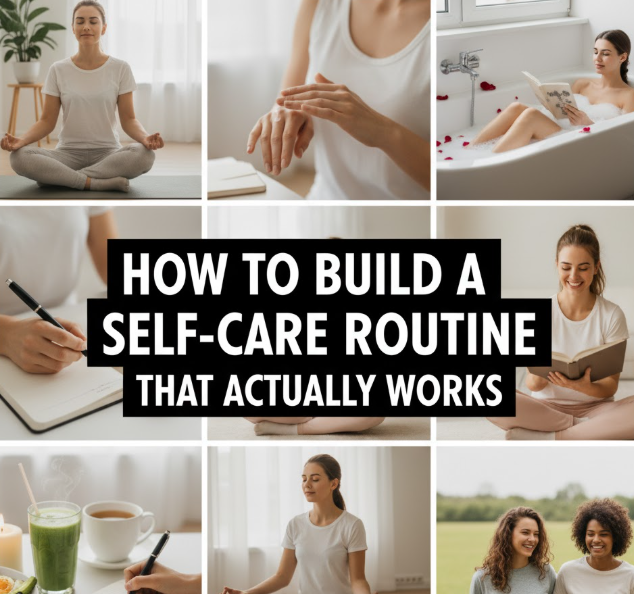
Introduction: Why Real Self-Care Matters More Than Ever
We live in a world that glorifies being busy. Between work, school, social media, and family responsibilities, it’s easy to forget one crucial person — yourself. Many people think self-care means spa days, face masks, or buying something nice. While those things can help, real self-care goes much deeper.
Building a self-care routine that actually works isn’t about luxury — it’s about balance, health, and long-term happiness. It’s about finding small, meaningful habits that keep your body, mind, and emotions in sync.
In this guide, we’ll break down how to create a self-care routine that fits you — your lifestyle, your goals, and your energy levels — so you can wake up feeling more focused, confident, and calm.
What Real Self-Care Looks Like
Self-care is not selfish — it’s essential. But for it to truly work, it must be consistent, intentional, and personalized.
Here’s what self-care is and isn’t:
| Self-Care Is | Self-Care Isn’t |
|---|---|
| Taking time to rest and recharge | Overindulging or escaping responsibilities |
| Setting healthy boundaries | Avoiding people completely |
| Eating nutritious food | Emotional eating to cope |
| Prioritizing sleep | Staying up late to “catch up” on shows |
| Being kind to yourself | Ignoring your problems |
| Practicing mindfulness and gratitude | Obsessing over perfection |
When you see self-care as a lifestyle rather than a one-time activity, it becomes easier to stay consistent and see real results.
Step 1: Discover What You Truly Need
Before you start setting routines, ask yourself: What do I actually need right now?
Self-care should meet your current emotional, physical, and mental needs.
Here’s how you can figure that out:
A. Check In With Yourself
-
How is your energy lately?
-
Are you feeling overwhelmed, unmotivated, or disconnected?
-
What part of your life feels out of balance — sleep, nutrition, work, relationships, or mindset?
Try writing in a journal or using a quick checklist like this:
| Area | Current State (1-5) | Needs Improvement? |
|---|---|---|
| Sleep | 2 | ✅ |
| Physical activity | 3 | ✅ |
| Emotional well-being | 4 | ❌ |
| Relationships | 2 | ✅ |
| Nutrition | 3 | ✅ |
| Fun & relaxation | 1 | ✅ |
This kind of self-reflection helps you spot which parts of your life need the most care first.
B. Identify Your Energy Patterns
Some people thrive in the morning; others feel most alive at night. Track your daily energy levels for a week to find your natural rhythm.
Once you know when you’re most productive or relaxed, you can schedule your self-care around those times — instead of forcing it.
Step 2: Build a Foundation With Basic Self-Care Pillars
Every great routine starts with the essentials — the habits that support both your physical and emotional health.
Here are the five main pillars to build around:
1. Rest and Sleep
Sleep is your body’s natural reset button. Yet, many people treat it like an optional luxury.
Aim for 7–9 hours of sleep per night, and focus on sleep quality, not just duration.
Tips for better sleep:
-
Stick to a consistent sleep schedule (even on weekends)
-
Avoid screens 1 hour before bed
-
Keep your bedroom cool, dark, and quiet
-
Create a simple bedtime routine (like journaling or stretching)
2. Nourishment and Hydration
What you eat and drink affects everything — from your focus to your mood.
Practical nutrition goals:
-
Eat balanced meals (protein + fiber + healthy fats)
-
Limit excessive sugar or processed snacks
-
Drink enough water — around 2–3 liters per day
You can use this quick chart to balance your daily meals:
| Meal Type | What to Include | Example |
|---|---|---|
| Breakfast | Protein + Complex carbs | Oatmeal with nuts and fruit |
| Lunch | Lean protein + Vegetables | Grilled chicken with quinoa salad |
| Dinner | Light protein + Fiber | Baked salmon with steamed veggies |
| Snacks | Smart choices | Yogurt, nuts, or fruit |
3. Movement
Exercise isn’t just for physical fitness — it’s also a proven way to boost your mood, reduce anxiety, and sharpen focus.
Start small:
You don’t need an hour-long gym session every day. Even 15–20 minutes of walking, yoga, or stretching counts.
Try different forms of movement:
-
Morning stretches
-
Dancing to your favorite song
-
Taking the stairs instead of the elevator
-
Joining a fun class like Zumba or Pilates
The goal is consistency, not intensity.
4. Mindfulness and Mental Space
Your mind needs care just like your body does. Mindfulness helps you slow down, focus, and handle stress better.
Easy mindfulness practices:
-
5 minutes of deep breathing each morning
-
Journaling thoughts or gratitude at night
-
Guided meditation apps (like Calm or Headspace)
-
Taking tech-free breaks during the day
5. Connection and Joy
Humans are wired for connection. Spending time with people who uplift you is powerful self-care.
Ways to stay connected:
-
Call a friend once a week
-
Have dinner with family without screens
-
Join a local group or class with similar interests
Also, make room for joy — small things that make you happy, like painting, music, or a walk in nature.
Step 3: Design a Routine That Fits Your Life
This is where most people get stuck — they create routines that look good on paper but don’t match their real schedules.
The secret? Start small and stay realistic.
A. Choose a Routine Type That Works for You
| Routine Type | Best For | Example Activities |
|---|---|---|
| Morning Routine | Starting the day with energy and focus | Stretching, journaling, affirmations |
| Midday Routine | Recharging during busy hours | Short walk, hydration, deep breathing |
| Evening Routine | Calming your mind before bed | Skincare, reading, gratitude journaling |
| Weekly Routine | Long-term self-care activities | Meal prep, digital detox, nature time |
B. Keep It Simple
When building your routine, think of it as stacking small habits rather than overloading your schedule.
Example: Beginner Self-Care Routine
| Time | Activity | Duration |
|---|---|---|
| Morning | Drink a glass of water, stretch, and write one gratitude note | 10 min |
| Midday | Take a 10-minute walk outside | 10 min |
| Evening | No screens 30 minutes before bed; journal 3 things that went well | 15 min |
Once this feels natural, you can add more — like a skincare routine, weekly goal setting, or a digital detox day.
Step 4: Make It Stick — Turn Habits Into Lifestyle
Creating a self-care plan is easy. Sticking to it is the challenge.
Here are proven ways to stay consistent:
1. Start With Micro-Habits
Small habits are easier to maintain and compound over time.
Example: Instead of saying “I’ll meditate for 30 minutes daily,” start with just 3 minutes.
2. Use Habit Pairing
Connect new habits to existing ones.
Example:
-
“After brushing my teeth, I’ll stretch for 2 minutes.”
-
“After lunch, I’ll take a short walk.”
3. Track Your Progress
Use a self-care tracker or habit app to measure consistency. Even a simple checklist in your journal works.
| Day | Sleep (7h) | Water (8 cups) | Exercise (15 min) | Gratitude Note |
|---|---|---|---|---|
| Monday | ✅ | ✅ | ✅ | ✅ |
| Tuesday | ❌ | ✅ | ✅ | ✅ |
| Wednesday | ✅ | ❌ | ✅ | ✅ |
Seeing your progress keeps you motivated and helps you identify weak spots.
4. Be Flexible
Your needs change. Your self-care routine should too.
If something stops feeling helpful, adjust it. The goal is growth, not perfection.
Step 5: Add Emotional and Mental Self-Care
Sometimes, even when you eat well and exercise, stress or anxiety can build up. That’s where emotional self-care comes in.
1. Learn to Say No
Boundaries protect your time and energy. Saying no to things that drain you is not rude — it’s healthy.
2. Practice Positive Self-Talk
Replace harsh self-criticism with kind, realistic thoughts.
Instead of “I’m so lazy,” try, “I’m tired today, and that’s okay. I’ll rest and try again tomorrow.”
3. Unplug Regularly
Constant notifications keep your brain in stress mode. Take tech breaks or schedule social media-free days.
4. Seek Support When Needed
Talking to friends, journaling, or seeking professional help can make a big difference. Emotional wellness is strength, not weakness.
Step 6: Create a Weekly or Monthly Self-Care Plan
To make your routine sustainable, plan ahead.
Here’s an example layout you can personalize:
| Day | Focus Area | Activities |
|---|---|---|
| Monday | Physical Health | Gym or walk, drink enough water |
| Tuesday | Mental Clarity | Journal, meditate for 10 min |
| Wednesday | Nutrition | Meal prep for the week |
| Thursday | Relationships | Call or meet a friend |
| Friday | Fun | Watch a movie, dance, or play a game |
| Saturday | Rest | Sleep in, read, no alarms |
| Sunday | Reflection | Review your week and plan next one |
Bonus: Self-Care for Busy People
If you feel like you “don’t have time,” try pocket-sized self-care — tiny habits that fit anywhere.
Quick Ideas:
-
1-minute deep breathing before a meeting
-
Stretching while watching TV
-
Listening to calming music while driving
-
Drinking water before coffee
-
Saying one positive affirmation every morning
Even small steps done regularly make a huge impact.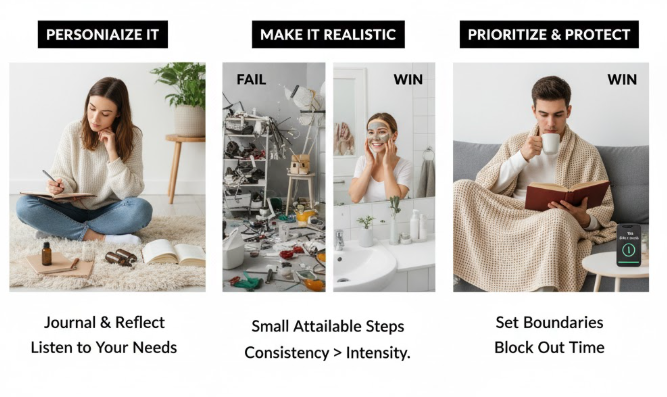
Self-Care Myths That Hold You Back
Let’s clear up some common misconceptions:
| Myth | Truth |
|---|---|
| Self-care is expensive | Many forms of self-care cost nothing — like sleep, walking, or gratitude |
| It’s only for women | Everyone needs self-care, regardless of gender |
| You need lots of free time | Small, consistent actions matter more than long routines |
| It’s selfish | Taking care of yourself helps you take better care of others |
| It has to be perfect | Flexibility is key; it’s okay to adjust |
Self-Care Routine Example: 24-Hour Blueprint
| Time of Day | Routine Example | Purpose |
|---|---|---|
| 7:00 AM | Wake up, stretch, drink water | Boost energy |
| 7:30 AM | Healthy breakfast | Nourish your body |
| 9:00 AM | Plan your day or to-do list | Stay focused |
| 12:00 PM | Take a 10-minute walk | Refresh your mind |
| 3:00 PM | Drink water, deep breathing | Regain focus |
| 6:00 PM | Exercise or light movement | Relieve stress |
| 8:00 PM | Dinner and tech-free time | Relax |
| 9:30 PM | Journal and gratitude list | Reflect |
| 10:00 PM | Sleep | Recharge |
Conclusion: Your Self-Care Is a Journey, Not a Destination
Building a self-care routine that truly works takes time, patience, and self-awareness. It’s not about doing everything perfectly — it’s about showing up for yourself every day in small, meaningful ways.
Start simple. Add one new habit. Drop what doesn’t serve you. Over time, these little acts of care will transform not just your days, but your entire outlook on life.
Remember:
Self-care isn’t something you earn after being productive — it’s what allows you to be your best self in the first place.
So take a deep breath, grab a notebook, and begin designing the self-care routine you truly deserve.
