


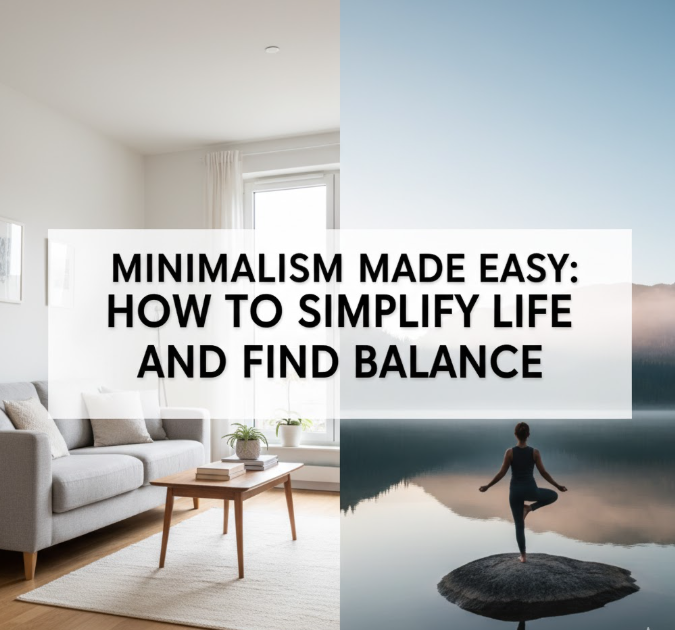
Introduction: The Power of Less
Have you ever looked around your room and felt overwhelmed by how much “stuff” you’ve collected? Or scrolled endlessly on your phone and realized how cluttered your digital life has become? That’s where minimalism steps in — not as a trend, but as a lifestyle choice that helps you focus on what truly matters.
Minimalism isn’t about living with almost nothing or giving up comfort. It’s about creating space for peace, clarity, and happiness by removing the excess that weighs you down — whether it’s physical clutter, mental stress, or digital distractions.
This guide will walk you through practical, simple, and real-world ways to make minimalism easy to start and enjoyable to live by. Whether you’re a student, a professional, or a homemaker, you’ll discover how to simplify your surroundings, balance your time, and live more intentionally every day.
What Minimalism Really Means
Minimalism means living with purpose — choosing quality over quantity and focusing on the things, people, and activities that truly bring you joy.
It’s not just about owning fewer things; it’s about freeing yourself from distractions and obligations that don’t serve you. Think of it like cleaning out your closet, but for your life.
Core Idea of Minimalism
-
Keep what adds value
-
Let go of what doesn’t
-
Create space for what matters most
Why Simplifying Your Life Matters
When life gets too busy or cluttered, your brain struggles to focus. This chaos can lead to stress, fatigue, and even anxiety. Simplifying your environment and routines can restore mental calmness and help you perform better at school, work, or even in your relationships.
Key Benefits of Living Simply
| Area | Benefits |
|---|---|
| Mental Health | Reduces anxiety, stress, and overthinking |
| Productivity | Increases focus and efficiency |
| Finances | Encourages mindful spending and saving |
| Relationships | Helps you connect deeply with people |
| Well-being | Boosts happiness and overall life satisfaction |
Step 1: Declutter Your Physical Space
Start Small, Think Big
Minimalism begins at home. Start with one drawer, one shelf, or one room. Once you see the difference, you’ll be motivated to continue.
Simple Decluttering Tips
-
Set a timer: Work in 15–20 minute bursts.
-
Use the 3-Box Method:
-
Keep
-
Donate/Sell
-
Throw away
-
-
Ask the golden question: “Have I used this in the past six months?”
-
Keep only what sparks joy or serves a purpose.
Minimalist Home Checklist
| Category | Keep | Remove |
|---|---|---|
| Clothes | Basics, seasonal wear, favorites | Duplicates, outdated items |
| Decor | Functional or meaningful pieces | Excess or unused decor |
| Kitchen | Everyday utensils | Extra sets, unused gadgets |
| Papers | Important documents | Junk mail, old receipts |
Pro Tip: Take before-and-after photos of decluttered areas. Visual progress keeps you motivated!
Step 2: Simplify Your Digital World
Your phone and laptop can be as cluttered as your closet. Endless notifications, emails, and apps drain your focus.
Digital Decluttering Tips
-
Unsubscribe from unnecessary newsletters.
-
Delete unused apps and duplicate photos.
-
Organize files into folders by type or purpose.
-
Set “no screen” hours — especially before bed.
-
Turn off non-essential notifications.
Helpful Chart: Digital Minimalism Routine
| Task | Frequency | Purpose |
|---|---|---|
| Clear downloads folder | Weekly | Keep storage organized |
| Inbox cleanup | Daily | Reduce overwhelm |
| Social media check | 1–2 times/day | Avoid time waste |
| Back up photos & files | Monthly | Data safety |
Result: A cleaner digital life means better focus, deeper creativity, and calmer mornings.
Step 3: Simplify Your Schedule
Many of us fill our days with back-to-back commitments — work, errands, social events — leaving no room for rest. A minimalist approach to time helps you do less but better.
How to Declutter Your Time
-
List all daily tasks.
-
Highlight what truly matters.
-
Eliminate or delegate the rest.
-
Schedule downtime like you would schedule meetings.
Practical Ways to Simplify Your Routine
-
Batch similar tasks: Reply to all emails at once.
-
Say “no” more often: You can’t do everything.
-
Use time blocks: Set fixed times for focused work.
-
Prioritize rest: A peaceful mind is more productive.
Example of a Balanced Daily Routine:
| Time | Activity | Focus |
|---|---|---|
| 6:30 AM | Wake up & stretch | Mind-body connection |
| 7:00 AM | Breakfast & journaling | Mental clarity |
| 8:00–12:00 PM | Work/study | Deep focus |
| 12:00–1:00 PM | Lunch & short walk | Refresh energy |
| 1:00–5:00 PM | Productive tasks | Efficiency |
| 5:00–8:00 PM | Family & hobbies | Connection |
| 9:00–10:00 PM | Digital detox & reading | Calm sleep |
Step 4: Rethink Your Spending Habits
Minimalism doesn’t mean being cheap — it means being intentional. Every purchase should serve a clear purpose.
The 3-Question Rule Before Buying
-
Do I truly need this?
-
Will I still value it in six months?
-
Can I afford it without stress?
Adopt the “One In, One Out” Rule
Whenever you buy something new, let go of an old item. This keeps your environment balanced and prevents clutter from returning.
Budgeting the Minimalist Way
| Spending Category | Action |
|---|---|
| Essentials | Buy quality, not quantity |
| Wants | Delay 24 hours before buying |
| Savings | Automate monthly savings |
| Subscriptions | Keep only what you use |
Tip: Use apps like Mint or YNAB to track expenses and cut unnecessary costs.
Step 5: Cultivate a Minimalist Mindset
True minimalism starts in your mind. You can declutter your house, but without a clear mindset, clutter returns in other forms — stress, distractions, or emotional baggage.
How to Simplify Mentally
-
Practice mindfulness: Stay present instead of worrying.
-
Limit multitasking: Focus on one thing at a time.
-
Let go of perfection: “Good enough” is often perfect.
-
Detach from material identity: You are not your possessions.
Mental Decluttering Habits
| Habit | Effect |
|---|---|
| Journaling | Clears emotional clutter |
| Gratitude practice | Shifts focus from lack to abundance |
| Meditation | Increases calm and awareness |
| Quiet time | Enhances creativity |
Step 6: Simplify Your Relationships
Minimalism applies to people too — not in a cold way, but in a healthy one. It’s about spending time with those who uplift and inspire you, not drain your energy.
Relationship Minimalism Principles
-
Quality over quantity: A few genuine friends are worth more than dozens of shallow ones.
-
Set boundaries: It’s okay to say no when you need space.
-
Be present: Listen more, scroll less.
-
Detach from toxic connections: Your peace matters most.
Healthy Relationship Circle Chart
| Type | Keep | Let Go |
|---|---|---|
| Supportive & positive | ✓ | |
| Demanding or negative | ✗ | |
| Inspiring mentors | ✓ | |
| Constant complainers | ✗ |
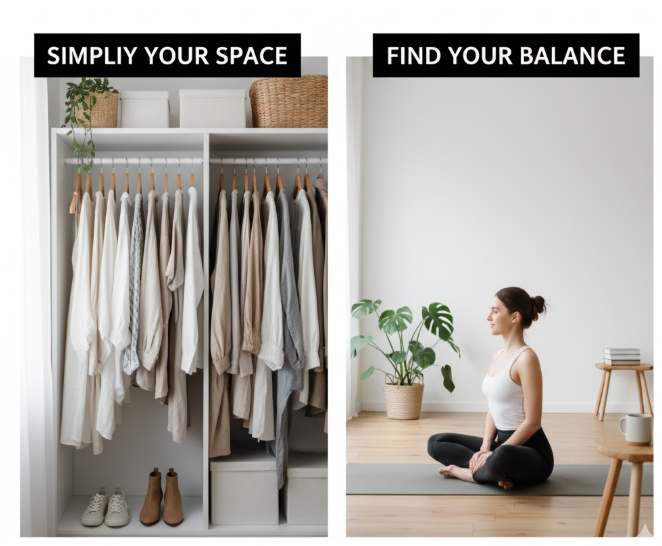
Step 7: Embrace Minimalism in Your Wardrobe
A minimalist wardrobe saves time, money, and decision fatigue. You don’t need 50 shirts — just a few pieces that mix and match easily.
Steps to a Minimalist Closet
-
Empty everything out.
-
Sort into categories: Keep, Donate, Trash.
-
Keep versatile, neutral colors.
-
Build a capsule wardrobe — clothes that pair easily.
Example Capsule Wardrobe
| Category | Pieces | Color Tip |
|---|---|---|
| Tops | 5–7 | Neutral (white, beige, navy) |
| Bottoms | 3–4 | Black, gray, khaki |
| Shoes | 2–3 | Comfortable, timeless |
| Outerwear | 1–2 | Seasonally appropriate |
Bonus Tip: Choose quality fabrics over fast fashion — they last longer and feel better.
Step 8: Find Balance — The Heart of Minimalism
Balance is not about removing everything; it’s about keeping just enough. The goal is a lifestyle that feels light yet fulfilling.
Ways to Maintain Balance
-
Set clear priorities: Family, health, growth.
-
Avoid overcommitment: Leave space for rest.
-
Enjoy small pleasures: Nature walks, journaling, tea breaks.
-
Practice gratitude daily.
Balance Chart
| Life Area | Minimalist Approach | Result |
|---|---|---|
| Home | Organized & cozy | Calm mind |
| Work | Focused tasks | Better performance |
| Health | Simple meals & exercise | Energy boost |
| Social | Genuine relationships | Emotional peace |
Common Myths About Minimalism (and the Truth)
| Myth | Reality |
|---|---|
| Minimalism means owning nothing. | It means owning only what adds value. |
| It’s only for rich people. | Anyone can practice minimalism at any budget. |
| Minimalism is boring. | Simplicity creates room for creativity and joy. |
| You must live in a white room. | Minimalism looks different for everyone. |
| It’s a quick fix. | It’s a lifelong practice of intentional living. |
How Minimalism Improves Your Mental and Emotional Health
Simplifying your life directly affects your mind and mood. Clutter is visual stress; minimalism removes it.
Science-Backed Benefits
-
Less clutter = lower cortisol (stress hormone)
-
Organized environments improve focus by 30–40%
-
Simplified routines improve sleep quality
-
Mindful consumption leads to long-term happiness
Emotional Rewards:
-
You appreciate what you already have
-
You stop comparing your life to others
-
You find joy in ordinary moments
How to Stay Consistent With Minimalism
Starting is easy — staying consistent is where the magic happens.
Tips to Keep Going
-
Revisit your space monthly.
-
Reflect weekly: What feels overwhelming? Fix it.
-
Limit media consumption.
-
Celebrate small wins: Every cleared drawer counts.
-
Involve family: Shared simplicity strengthens bonds.
Motivational Quote:
“Minimalism is not about having less. It’s about making room for more of what matters.”
Practical Minimalism: A Real-Life Example
Imagine two people:
-
Ali owns a house full of gadgets, clothes, and decorations he rarely uses.
-
Sara owns fewer items, each chosen carefully for its purpose or beauty.
Ali spends weekends cleaning, organizing, and shopping for more.
Sara spends weekends hiking, reading, and enjoying life.
Both have the same 24 hours — but Sara’s minimalism gives her more freedom, balance, and joy.
Infographic: The Minimalist Journey
Step-by-Step Visual Guide:
1️⃣ Declutter → 2️⃣ Simplify → 3️⃣ Organize → 4️⃣ Focus → 5️⃣ Balance → 6️⃣ Freedom
Each stage reduces chaos and increases peace — leading you to a simpler, happier life.
Conclusion: Start Small, Live Fully
Minimalism isn’t a challenge — it’s a choice for freedom. You don’t have to give up everything or move to a tiny house. You just have to start with one step: clearing space for peace and meaning.
When you simplify your surroundings, your mind follows. You’ll begin to notice that with fewer distractions, life feels lighter, calmer, and more intentional.
So today, pick one thing to remove, one space to clear, or one commitment to let go of.
Because sometimes, the less you have, the more room there is for happiness.
