



Introduction: The Secret Behind a Great Day
Have you ever wondered why some people seem to achieve so much before noon while others can barely get out of bed on time? It’s not magic—it’s routine.
The world’s most successful and productive people—from business leaders and athletes to writers and scientists—all share one common trait: they have intentional morning routines.
Your morning sets the tone for your entire day. If you start with focus, energy, and purpose, everything else flows better. If you start rushed and disorganized, you spend the rest of the day trying to catch up.
In this article, you’ll discover:
-
The key habits of highly productive people’s mornings.
-
How to design your own morning routine that actually fits your lifestyle.
-
Practical tips, examples, and step-by-step plans to make mornings your strongest part of the day.
🌞 Why Mornings Matter More Than You Think
Mornings are like the foundation of a house. If your foundation is weak, the rest of the structure struggles.
When you wake up and take control of your morning, you set yourself up to make better decisions, stay calm, and focus on what truly matters.
Science Says So
According to psychological research, your willpower and mental energy are strongest right after waking up. That means early hours are perfect for doing the tasks that require creativity, problem-solving, or planning.
| Morning Benefit | Why It Matters |
|---|---|
| Better Focus | Fewer distractions and higher mental clarity |
| Improved Mood | Cortisol and serotonin levels balance with sunlight and movement |
| Increased Productivity | Early hours allow deep work before interruptions begin |
| Consistent Progress | Daily repetition builds strong habits |
🕖 Common Morning Habits of Highly Productive People
Let’s take a look at what some of the world’s most successful people actually do every morning—and what you can learn from them.
1. They Wake Up Early (But Not All at the Same Time)
Waking up early isn’t about joining the “5 AM club.” It’s about waking up with intention—not rushing.
Examples:
-
Tim Cook (Apple CEO): Wakes up at 3:45 a.m. to read user feedback and exercise.
-
Oprah Winfrey: Wakes up naturally around 6 a.m., starts with meditation and exercise.
-
Richard Branson: Rises at 5 a.m. for tennis or kitesurfing before work.
Takeaway:
It’s less about the clock and more about creating space before your day begins—to think, move, or plan without stress.
2. They Avoid Their Phones
The moment you grab your phone, you’re letting the outside world control your attention.
Productive people protect their mornings from digital chaos. They don’t check emails, social media, or news until they’ve centered themselves.
Instead, they might:
-
Read a few pages of a book
-
Journal
-
Meditate
-
Reflect quietly
💡 Tip: Try the “Phone-Free First Hour” rule — no screens until after your morning routine is complete.
3. They Move Their Bodies
Exercise in the morning wakes up your mind just as much as your muscles.
You don’t need a full workout—just 10–20 minutes of movement can make a huge difference.
Options include:
-
Stretching or yoga
-
A brisk walk or jog
-
Jumping rope
-
A short HIIT session
-
Dancing to music you love
Physical movement boosts endorphins, which means you’ll start your day happier and more focused.
4. They Practice Mindfulness or Gratitude
Starting your day with gratitude or mindfulness helps shift your mindset from stress to appreciation.
Ways to practice:
-
Write down three things you’re grateful for
-
Sit quietly and focus on your breathing
-
Read an inspirational quote or passage
Why it works:
When you begin your day feeling thankful, it’s harder for negativity to take over later. It also trains your brain to focus on opportunities, not obstacles.
5. They Eat a Balanced Breakfast
While some people prefer intermittent fasting, most productive individuals make sure their bodies are fueled properly.
| Great Breakfast Options | Benefits |
|---|---|
| Oatmeal with fruits and nuts | Slow energy release and brain support |
| Smoothie with greens and protein | Quick and nutrient-packed |
| Eggs with whole-grain toast | Balanced protein and carbs |
| Yogurt with honey and berries | Boosts gut health and mood |
Pro Tip: Hydrate first — drink a glass of water before coffee or food to kickstart your metabolism.
6. They Set Daily Intentions
Instead of letting the day “just happen,” highly productive people plan their day.
They don’t write long to-do lists. They prioritize.
Try the 3-MIT rule (Most Important Tasks):
-
Identify your top 3 priorities for the day.
-
Focus on completing them before lunch.
-
Let everything else follow after.
This small habit prevents overwhelm and ensures you finish what truly matters.
7. They Read, Learn, or Reflect
Morning reading—especially non-fiction, biographies, or motivational material—feeds the mind before the day’s noise begins.
Examples:
-
Bill Gates: Reads for about an hour every morning.
-
Barack Obama: Starts his day reading news summaries and briefings quietly.
You can do the same by:
-
Reading 10 pages of a book
-
Listening to an audiobook while exercising
-
Reviewing personal goals or journaling
🌄 How to Create Your Own Morning Routine
Now that you’ve seen how productive people start their days, let’s build your personalized morning routine—one that energizes you and fits your lifestyle.
Step 1: Decide Your “Why”
Before you change anything, ask yourself:
“Why do I want a morning routine?”
Possible reasons could be:
-
To feel more in control of your day
-
To boost focus and reduce stress
-
To make time for goals or self-care
Knowing your “why” keeps you consistent.
Step 2: Set Your Ideal Wake-Up Time
You don’t have to wake up before sunrise. Instead, wake up early enough to have at least 45–90 minutes for yourself before work or school.
| Sleep Goal | Wake-up Time Suggestion |
|---|---|
| 8 hours (healthy adults) | Go to bed at 10 p.m., wake up at 6 a.m. |
| 7 hours | Sleep at 11 p.m., wake up at 6 a.m. |
| 6 hours (minimum) | Sleep at midnight, wake up at 6 a.m. |
Pro Tip: Keep your bedtime and wake-up time consistent—even on weekends.
Step 3: Build a Simple Routine (Start Small)
Here’s a sample 60-minute morning routine you can try:
| Time | Activity | Purpose |
|---|---|---|
| 6:00 – 6:10 | Hydrate & freshen up | Wake up your body |
| 6:10 – 6:25 | Stretch or light exercise | Boost energy |
| 6:25 – 6:40 | Meditation or gratitude journaling | Calm the mind |
| 6:40 – 6:50 | Read or learn something inspiring | Mental growth |
| 6:50 – 7:00 | Plan 3 main tasks for the day | Focus & clarity |
Don’t try to do everything at once. Start with one habit, master it, then add another.
Step 4: Prepare the Night Before
Your morning success starts the night before.
Before bed, do these simple things:
-
Lay out your clothes
-
Prepare breakfast items (overnight oats, smoothie packs)
-
Write your to-do list for tomorrow
-
Keep your phone away from your bed
When your environment is ready, you’ll wake up calmer and more in control.
Step 5: Make It Enjoyable, Not Stressful
A morning routine should inspire you, not feel like a chore.
To make it enjoyable:
-
Play your favorite soft music
-
Light a candle or open your curtains for sunlight
-
Keep your coffee ritual sacred
-
Mix in something fun—like journaling or a short podcast
Remember: consistency is easier when it feels rewarding.
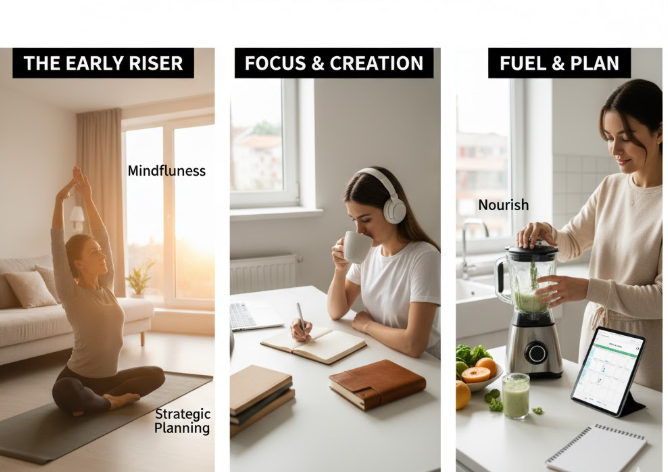
📊 The Morning Routine Formula: Simplified
Here’s a quick visual formula you can follow:
| Category | Example Activities | Time Range |
|---|---|---|
| Mind | Meditation, journaling, gratitude | 10–15 min |
| Body | Exercise, stretching, walking | 15–20 min |
| Growth | Reading, planning, goal setting | 10–15 min |
| Energy | Breakfast, sunlight, hydration | 10–15 min |
Total: ~45–60 minutes
Even if you only have 20 minutes, do one small thing from each category—it still counts.
☀️ How to Stay Consistent (Even When You Don’t Feel Like It)
Creating a morning routine is easy. Sticking to it is the real challenge.
Here’s how to make it last:
1. Start Tiny
Begin with just one habit—like drinking water or stretching for 5 minutes. Build up over time.
2. Track Your Progress
Use a calendar or habit-tracking app. Mark every day you complete your routine. Visual progress motivates you.
3. Reward Yourself
Celebrate consistency. Treat yourself to a nice breakfast or weekend relaxation after a streak.
4. Be Flexible
Some mornings won’t go perfectly—and that’s okay. Don’t quit; simply pick up again the next day.
5. Protect Your Sleep
No routine works without good rest. Aim for 7–8 hours of sleep to wake up refreshed.
🧠 What Successful People Say About Their Mornings
Here’s what some of the most productive minds believe about mornings:
| Person | Morning Philosophy |
|---|---|
| Barack Obama | “The routine frees me from thinking about small stuff, so I can focus on decisions that matter.” |
| Tony Robbins | “The first 10 minutes of my morning determine how I feel the rest of the day.” |
| Elon Musk | Focuses mornings on “solving critical problems first before distractions begin.” |
| Michelle Obama | “My morning workout is my ‘me time’ before my day belongs to everyone else.” |
Each of them has a structure that matches their lifestyle, but all share one thing: intention.
💬 Quick Checklist: Build Your Perfect Morning Routine
✅ Wake up at a consistent time
✅ Avoid your phone for the first hour
✅ Drink water and move your body
✅ Practice mindfulness or gratitude
✅ Eat something nourishing
✅ Review your goals or daily priorities
✅ Include something enjoyable or inspiring
✅ Go to bed early enough for good sleep
If you follow even 5 out of 8 of these habits, you’ll start to see major improvements in energy, focus, and happiness.
⚙️ Troubleshooting: Why Your Morning Routine Isn’t Working
Sometimes, routines fail because of small mistakes. Here’s how to fix them:
| Problem | Possible Reason | Quick Fix |
|---|---|---|
| Always running late | Waking up too late or overloading tasks | Simplify routine; prepare at night |
| Feeling tired | Poor sleep or dehydration | Sleep earlier; hydrate first thing |
| Losing motivation | Routine feels boring | Add variety—try new music, routes, or exercises |
| Skipping breakfast | Lack of time | Prep overnight oats or smoothies |
| Checking phone early | Habit trigger near bed | Keep phone outside the bedroom |
🌤️ Sample Morning Routines for Different Lifestyles
🧑💼 For Professionals
Goal: Focus, energy, productivity
Routine Example:
-
6:00 a.m. – Wake up & drink water
-
6:10 a.m. – 20-min workout
-
6:30 a.m. – Shower & breakfast
-
6:50 a.m. – Read news or journal
-
7:10 a.m. – Plan top 3 work tasks
👩🎓 For Students
Goal: Better concentration & less stress
Routine Example:
-
6:30 a.m. – Stretch or walk
-
6:45 a.m. – Review notes or goals
-
7:00 a.m. – Breakfast & hydration
-
7:15 a.m. – Positive affirmation or journaling
👩👧 For Parents
Goal: Calm, order, and energy before the kids wake up
Routine Example:
-
5:45 a.m. – Quiet coffee & gratitude journaling
-
6:00 a.m. – Light exercise or meditation
-
6:30 a.m. – Plan meals & organize schedule
-
6:50 a.m. – Family prep time
🧘 For Creatives & Entrepreneurs
Goal: Inspiration & clarity
Routine Example:
-
6:00 a.m. – Journaling & reflection
-
6:20 a.m. – Walk or yoga
-
6:45 a.m. – Read or brainstorm ideas
-
7:15 a.m. – Outline goals for the day
🌈 The Real Reward: A Better Life, Not Just a Better Morning
Building a morning routine isn’t about perfection—it’s about progress. When you control your mornings, you control your mood, focus, and future.
Imagine waking up each day feeling calm, energized, and clear on what to do next.
That’s the quiet power of a well-designed morning routine.
🧭 Final Thoughts: Make Your Mornings Count
You don’t have to copy someone else’s morning. Create one that fits your personality, schedule, and goals.
