


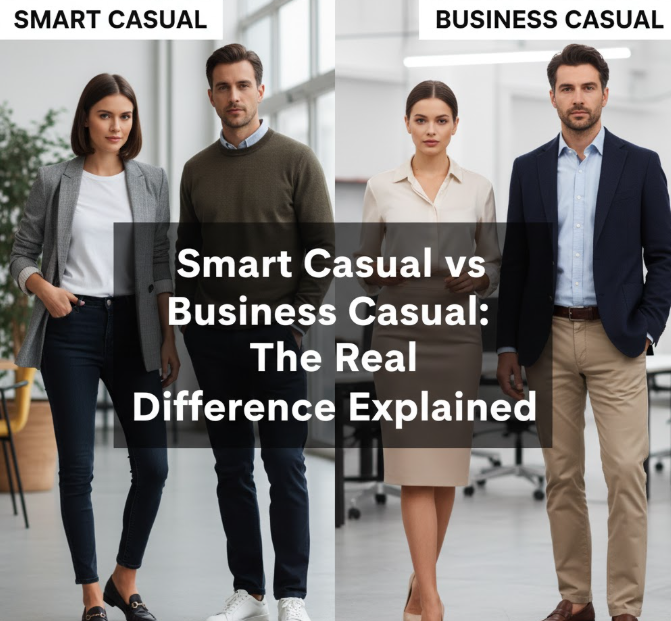
Fashion isn’t just about looking good—it’s about dressing with purpose. Whether you’re heading to a meeting, a networking event, or a relaxed dinner with colleagues, the line between smart casual and business casual can get blurry. Many people use these two dress codes interchangeably, but they actually represent different levels of formality, intention, and occasion.
In this guide, we’ll explore the real difference between smart casual and business casual, with practical examples, outfit ideas for men and women, and expert tips to help you master both styles effortlessly.
Why Dress Codes Matter More Than Ever
In today’s modern world, your outfit speaks before you do. The way you dress influences first impressions, confidence, and even how people respond to you.
-
At work, dressing appropriately shows professionalism.
-
At social gatherings, it reflects confidence and respect.
-
At networking events, it helps you stand out for the right reasons.
Knowing whether an event calls for smart casual or business casual can save you from awkward fashion mistakes—and help you present your best self in any setting.
Quick Overview: Smart Casual vs Business Casual
Here’s a simple breakdown before we go deeper 👇
| Feature | Smart Casual | Business Casual |
|---|---|---|
| Purpose | Stylish yet relaxed; ideal for social and semi-professional settings | Polished and professional; suitable for office and corporate events |
| Formality Level | Moderate | More formal |
| Colors | Broader range; includes trendy and seasonal colors | Neutral, solid, and muted tones |
| Footwear | Loafers, boots, stylish sneakers | Dress shoes, loafers, or low heels |
| Accessories | Fashion-forward | Minimal and functional |
| Occasions | Dinners, casual Fridays, dates, creative workspaces | Office settings, meetings, conferences |
What Is Smart Casual?
Smart casual sits in the middle of the fashion scale—smarter than casual, but not as serious as business wear. It’s all about mixing comfort with style.
Think of it as your “go-to” look for occasions where jeans might be too casual, but a full suit feels too formal.
Key Elements of Smart Casual
-
Balance – You’re aiming for polished but not overdone.
-
Individuality – There’s room to express your personality with colors and textures.
-
Versatility – Suitable for a wide range of social and semi-professional settings.
Smart Casual Outfit Ideas for Men
-
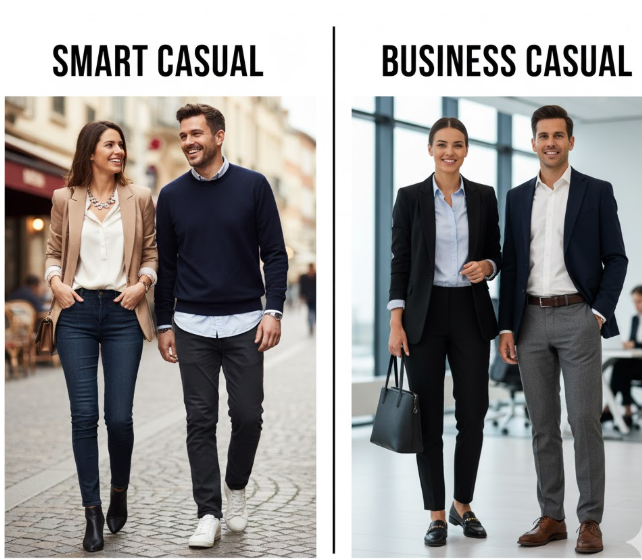
Top: Polo shirts, button-downs, or crew-neck sweaters
-
Bottom: Chinos, dark jeans (without rips), or tailored trousers
-
Footwear: Loafers, brogues, or clean white sneakers
-
Extras: Casual blazers, leather straps, or smart watches
💡 Pro Tip: Always tuck in your shirt when wearing smart casual to keep it neat.
Smart Casual Outfit Ideas for Women
-
Top: Blouses, knit tops, or structured shirts
-
Bottom: Dress pants, midi skirts, or dark denim
-
Footwear: Ballet flats, ankle boots, or block heels
-
Extras: Minimal jewelry and elegant handbags
💬 Style Tip: If your outfit feels “too casual,” add a blazer. If it feels “too formal,” swap formal shoes for chic flats or loafers.
What Is Business Casual?
Business casual bridges the gap between professional suits and everyday wear. It maintains the seriousness of business attire but with a touch of comfort and flexibility.
In short: It’s formal enough for meetings, but comfortable enough to wear all day.
Key Elements of Business Casual
-
Professional Base – Always lean toward a neat, office-ready appearance.
-
Neutral Palette – Stick to safe tones like navy, beige, gray, black, or white.
-
Tailoring – Fit matters. Nothing too tight or too loose.
Business Casual Outfit Ideas for Men
-
Top: Dress shirts, button-downs, or fine-knit sweaters
-
Bottom: Dress slacks or chinos
-
Footwear: Oxfords, loafers, or derby shoes
-
Extras: Leather belts, minimal ties, or blazers
💡 Pro Tip: Avoid sneakers—even clean ones. Stick with formal shoes to maintain professionalism.
Business Casual Outfit Ideas for Women
-
Top: Button-down shirts, silk blouses, or modest tops
-
Bottom: Tailored trousers, pencil skirts, or midi dresses
-
Footwear: Closed-toe heels, loafers, or flats
-
Extras: Simple jewelry and structured handbags
💬 Style Tip: In business casual, “less is more.” Avoid overly trendy accessories or bright colors.
Smart Casual vs Business Casual: The Real Difference
Let’s get into what truly separates these two dress codes beyond just clothing names.
1. Purpose and Setting
-
Smart Casual: More flexible—ideal for dinners, creative jobs, or informal gatherings.
-
Business Casual: Reserved for professional or semi-formal office settings.
Example:
-
Smart Casual: Dinner with colleagues at a café.
-
Business Casual: Weekly meeting at the office.
2. Level of Formality
Business casual always leans toward professional respectability, while smart casual leans toward personal style.
| Aspect | Smart Casual | Business Casual |
|---|---|---|
| Attitude | Relaxed confidence | Polished professionalism |
| Style Freedom | More room for creativity | Limited, formal tone |
| Dress Code Enforcement | Rarely enforced | Often company-defined |
3. Fabric and Fit
The texture and quality of your clothes make a big difference.
-
Smart Casual: Cotton, denim, linen, knitwear
-
Business Casual: Wool, polyester blends, crisp cotton
Pro Insight:
If your outfit has a structured silhouette, it usually fits business casual. If it’s softer and more flexible, it’s smart casual.
4. Color Palette and Accessories
Smart casual encourages color play—burgundy, olive, navy, or beige—while business casual sticks to corporate-friendly tones.
| Category | Smart Casual | Business Casual |
|---|---|---|
| Colors | Variety; trendy shades | Muted, neutral palette |
| Accessories | Watches, casual belts, fashion-forward bags | Classic ties, formal belts, minimal jewelry |
💡 Pro Tip:
In business settings, always avoid flashy jewelry or loud patterns—it can appear unprofessional.
5. Footwear Matters More Than You Think
Shoes often reveal which side of the spectrum your outfit sits on.
-
Smart Casual: Sneakers (minimalist), loafers, desert boots
-
Business Casual: Oxford shoes, pumps, leather loafers
👟 Rule of Thumb: If your shoes look like you can wear them to a wedding, they’re probably business casual.
Dressing Smart for Different Situations
Sometimes, the event or workplace doesn’t clearly mention a dress code. Here’s a quick guide to help you decide.
| Situation | Recommended Dress Code | Why |
|---|---|---|
| Startup Office | Smart Casual | Comfortable and creative atmosphere |
| Corporate Office | Business Casual | Professional yet not overly formal |
| Networking Events | Business Casual | Builds credibility |
| Weekend Brunch | Smart Casual | Relaxed yet stylish |
| Presentation Day | Business Casual | Command respect and attention |
| Company Dinner | Smart Casual | Allows personal expression |
Transitioning Between Smart Casual and Business Casual
The trick lies in small adjustments.
You can easily shift between the two without changing your whole outfit.
Men:
-
Swap jeans (smart casual) for chinos or slacks (business casual).
-
Replace a polo with a button-up shirt.
-
Trade sneakers for dress shoes.
Women:
-
Change dark denim for tailored pants or skirts.
-
Switch chunky jewelry for minimal accessories.
-
Replace open-toe shoes with closed-toe heels or flats.
Common Mistakes to Avoid
Even well-dressed people get it wrong sometimes. Here are the most frequent mistakes—and how to fix them.
Smart Casual Mistakes
❌ Wearing distressed jeans or graphic tees
❌ Over-accessorizing
❌ Mixing clashing colors
✅ Fix: Keep it neat, fitted, and balanced between casual and classy.
Business Casual Mistakes
❌ Wearing sneakers or sandals
❌ Overly bright colors or bold prints
❌ Ignoring grooming and wrinkles
✅ Fix: Always appear clean, pressed, and professional.
Smart Casual and Business Casual for Different Seasons
Your wardrobe should adapt as the weather changes—but your style shouldn’t lose its polish.
| Season | Smart Casual Ideas | Business Casual Ideas |
|---|---|---|
| Spring | Linen shirts, chinos, loafers | Blouses, light blazers, trousers |
| Summer | Polo shirts, cotton pants, loafers | Short-sleeve dress shirts, skirts |
| Autumn | Knitwear, dark jeans, jackets | Sweaters over shirts, wool skirts |
| Winter | Layered coats, scarves, boots | Wool suits, blazers, closed-toe shoes |
Why Getting It Right Matters
A clear understanding of these dress codes can:
-
Boost your professional image
-
Improve self-confidence
-
Help you fit in or stand out appropriately
-
Build a lasting impression on employers or clients
Think of dressing well as a silent form of communication—one that can open doors before you even speak.
Pro Tips to Always Stay on Point
-
Fit is everything. Even an expensive outfit looks bad if it doesn’t fit well.
-
Quality over quantity. Invest in timeless pieces like blazers, chinos, and formal shoes.
-
Neutral colors work everywhere. You can never go wrong with navy, white, gray, or beige.
-
Keep it wrinkle-free. Ironing or steaming your outfit makes a huge difference.
-
Be yourself. No dress code should make you feel uncomfortable—add subtle touches that reflect your personality.
Quick Visual Style Guide
Here’s a simplified infographic-style breakdown you can follow:
| Item Type | Smart Casual Example | Business Casual Example |
|---|---|---|
| Shirt | Polo or patterned button-down | Solid dress shirt |
| Pants | Chinos or dark jeans | Dress slacks or pencil skirt |
| Jacket | Casual blazer | Structured blazer |
| Shoes | Loafers or boots | Oxfords or heels |
| Accessories | Trendy watch, sunglasses | Leather belt, simple jewelry |
How to Build a Wardrobe That Works for Both
Instead of maintaining two separate wardrobes, you can build a versatile collection that transitions between both dress codes easily.
Essentials for Men
-
2–3 well-fitted blazers
-
Neutral chinos (beige, navy, gray)
-
Quality leather shoes
-
White and light blue shirts
-
Dark jeans for flexible styling
Essentials for Women
-
Blazers in neutral tones
-
Classic trousers and skirts
-
Button-up blouses
-
Elegant flats and low heels
-
Simple dresses (that can be dressed up or down)
With these basics, you can easily mix and match pieces depending on the formality level required.
Final Thoughts
In the debate between smart casual vs business casual, the real difference lies in intention and polish.
-
Smart casual is about relaxed elegance—showing style and personality without going overboard.
-
Business casual is about professional sophistication—showing reliability and respect through appearance.
Both dress codes are essential for modern professionals who move between offices, meetings, and social spaces. Once you understand the subtle differences, dressing for any occasion becomes effortless.
👔 Remember: You don’t need to follow every fashion rule—just learn them well enough to bend them gracefully.
